San Mateo County Genealogical Society's Blog featuring society events, projects, meeting notes and other items of relevance to genealogists.

Wednesday, March 16, 2016

San Mateo County Cemeteries: County Poor Farm


Over the years many burials took place at the County Relief Farm.  Other sources give a date of the start of the cemetery as 1894, but I would suggest that burials took place from the time the farm was opened.  In 1894 the registers started to indicate where those who died at the Poor Farm were buried.  Some were interred on the farm, others were taken to outside cemeteries.  Even after 1894 not all records indicated where the deceased was buried. And not all numbers are recorded in the registers


Support for earlier burials can be found in two facts. First the lack of information for many of the earlier burials in any other records. Second when the Institute for Canine Forensics brought cadaver dogs to search for burials on the Poor Farm Cemetery grounds they found more burials than had been recorded.


 We will never know. No decipherable markers remain in the burial grounds.  There are some ruins that appear to be the remnants of wooden markers, but they might be something else.  It is unlikely that there was ever anything other than inexpensive wooden markers.  Those with family or resources for burial were usually buried elsewhere.


Not everyone who was buried at the County Poor Farm had been an inmate of the Poor Farm/Hospital.  Outside indigents were brought to be buried through the years.  Not everyone who died at the hospital was buried on the grounds.  Many were removed to other cemeteries.  A few were interred and then disinterred and moved.  Some of those buried in the cemetery after 1906 have not been located in the CA death index.  This might be due to the misspellings found throughout the records.  It is also possible that some of the records were miscopied from the original sources and the deaths were attributed to the wrong person.

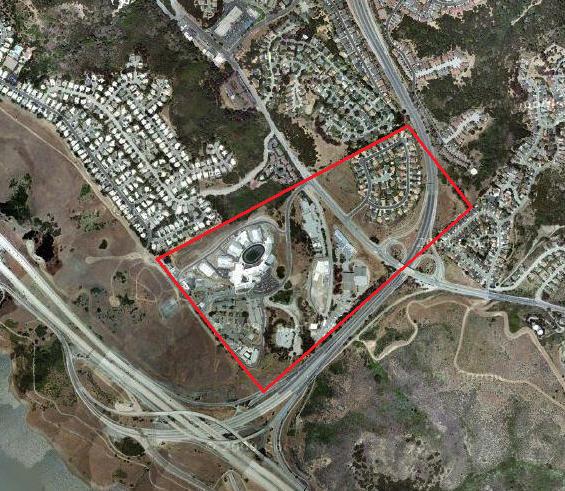
For those who find an ancestor buried here, the cemetery is located along the south side of highway 92 just east of Ralston Road.

San Mateo Times - 3 Aug 1929
(The register gives a date of 7 Aug 1929
states buried in grave ?
an example of the caliber of records)


SMT - 25 Nov 1915 p 15
Buried in Grave 244


San Francisco Call 20 Nov 1907
Buried Grave 99


SFC - 6 Aug 1911
Buried in Union Cemetery

Wednesday, March 9, 2016

San Mateo County Poor Farm

As early as 1855,  the California state legislature passed a bill known as the "Poor Law of 1855." The bill transferred the responsibility for providing medical care for the indigent ill from the state to the county's Boards of Supervisors. Counties were authorized to raise funds through taxes to establish hospitals and poorhouses. 

Geocaching - The Poor Farm


On 31 May 1876 the Sacramento Daily Union reported that "San Mateo county has purchased the farm of Hannibal Pullan for $10,000 for the purpose of a poor farm and a county hospital. The tract of land purchased contains 139 acres." (v.2 n.186)  Five months later the Marin Journal reported that the farm was in operation and added that the farm was six miles northwest of the county seat. (26 Oct 1876, v.16 n.33)   Alternately called the San Mateo County Relief Farm, the San Mateo County Poor Farm and the San Mateo County hospital, this respite for the sick, helpless and needy which opened 1 Jul 1876 was located in the hills near the current junction of I 280 and Hwy 92.  
San Mateo County Poor Farm
SMCHA Museum Archives

Inmates of the poor farm ranged from amputees, to alcoholics, to tuberculosis patients.  Some were simply old or senile and unable to live on their own.  Many were unmarried men, however at times there were widows and widowers, children and married individuals.  Some were there for a day, a few for decades. Those housed beyond the need for "hospitalization" were there at the bidding of the Board of Supervisors.  Over the years a few families paid support to the county for caring for their elderly relatives.  

I have seen some suggestion that there were "prison inmates" located at the farm, but I have found no records supporting this contention.  A few men were transferred to the county jail after being treated, but "inmate" is a term that was used for those committed to hospitals or asylums for care. Those inmates who were capable of working on the farm were expected to do so. A few were discharged because they refused.  Some of those committed to the farm did not choose to be there, a few ran away, others left as soon as they were able.  

Inmate registers, various financial reports, contracts and employee records have been located and a variety of databases to help find those connected to the poor farm in any way will be posted later this month with updates as further records are accessed.  Many of the records are incomplete and badly kept.  The same inmate might have his name spelled in three different ways on the same page and have different statistics for each of those entries. Many details were left out of the registers kept after 1916 leaving mainly names and dates. It seems likely that that register was done after the fact as much of the writing was in the same hand and looks to be written with the same pen.  Perhaps it was a copy of a volume that is no longer available, perhaps it was an attempt to consolidate information that had been kept only in the bath list and in monthly reports.
SF Call Vol 102-41 11 Jul 1907

The farm was seldom free of controversy.  Newspapers provide details of colorful characters and alleged corruption and abuse by those in charge.  Two supervisors were brought up on charges, Albert Eikerenkotter for misuse of resources and John Ford for striking an inmate. (See more in a later blog)


SF Chronicle 31 Jan 1909 p 26
 .  
As early as 1907 the Board of Supervisors put the farm up for sale.  What happened with that original sale is unknown. Locating the Board of Supervisors minutes for those early years might provide some answers, as well as details of some commitments to the farm. We do know the farm remained intact.  In 1909 the grand jury decried the deplorable conditions at the poor farm. and the grand jury in 1910 stated that while the farm was being well run the facilities were unfit. (SF Call v107-74 12 Feb 1910)


SF Call v113-85 23 Feb 1913
In 1912,  the grand jury recommended that the poor farm be sold and a fifteen acre plot be purchased near transportation. (SF Ch 31 Jan 1912 p4)  On 21 Feb (SFCh p8) it was reported that the Supervisors were considering the sale, that there had been an offer of $8000 and that there had been a bid from the Spring Valley Water Company...it does not say they are the same.  It is noted that the indigent list of the county is too small to need the larger acreage. 

In the end the only bid for the poor farm acreage was from the Spring Valley Water Company's Bourne who wanted the acreage, not for the water company, but to build a home for himself.  The county eventually rejected the bid and the farm went on as it had.

By 1918, the San Mateo County Board of Supervisors decided it was time to replace the original San Mateo County Community Hospital and Poor Farm. Dr. Kellog reported that the main building was a fire trap. Lighting was inadequate, the building was badly ventilated and the four wards were overcrowded. Toilets were flushable, but there was no water, he continued, as the wells had run dry. The nurse dispensed medicine at her own discretion, clinical records were not taken of the patients and there were no regular visits by the county physician, he added, the place smelled bad.  In 1919 construction of a new county hospital began in Beresford (San Mateo).  It opened it's doors in Sept 1923 leaving the Poor Farm to serve it's initial purpose, housing those unable to financially and physically care for themselves.

Improvements were made to the property in the 1920s.  T A water system with pump, 50000 gallon tank and pipe lines was put up for bid in 1925 by County Engineer Kneese, who estimated it would cost about $1700.  The second register for the poor farm has a entry in the front, "Electric Lights were Light for the first time on May 22,24 by Wm Tribblet, inmate."  Perhaps those lights were run by a generator for in 1926 PG&E submitted a bid to install a power line. Later that year the Bourne road was completed providing a direct route to the vicinity of the poor farm from Redwood City via Whipple Road.

There are some references to the buildings at the farm burning in 1925, but no direct evidence of the fires has been found to date.  It might explain the incomplete second register, however.  Perhaps the original register burned and the one we have was created to take it's place.

In 1929 the cost of maintaining the farming aspects of the relief home was again questioned.  The Board of Supervisors cut the budget, eliminating the 40 head of dairy cattle which were to be sold. Purchasers at an auction held in September included Manuel Cunha, JW Paulson, Manuel Sequera, JW Palson, Charles Beffa, Frank and Fred Marsh, Ralph Danz, Leo Domecus, Tony Azara, Mat Calahan, A Laurn, Joe Fassler and Ben Inderbutzen.  (E - Treasurer's Receipt Book)   On 20 Oct 1930 John Garcia renewed his lease on 100 acres of pasture at county poor farm for $700, the renewal indicating the land was probably originally leased out the year before after the cows were sold.

Still the Poor Farm continued, located registers stop in 1942.  Some sources claim Crystal Springs Rehabilitation Center was established in the 1920s, replacing the poor farm. No records have been found records supporting a particular date that the one replaced the other, the registers say Poor Farm. Today, besides Crystal Springs Rehabilitation Center, you will find the County Library Administrative Offices, the County Election Office, Hillcrest, the Sheriff's Office Crime Lab and more on the original grounds of the poor farm.


Wednesday, March 2, 2016

SMCGS Spring Seminar

San Mateo County Genealogical Society Spring 2016 Seminar

Successful Searching with Thomas MacEntee
                  

Saturday, May 7, 2016 - 9am-3pm
A Program of Four Lectures:


  • They're Alive: Searching for Living Persons:  In this session you’ll learn not only why it is important to locate living relatives, but how to leverage the power of Internet to make certain you have the correct contact information.  You’ll also learn how making contact with the living can hone your genealogy research skills and actually help you break down those brick walls.
  • After You're Gone: Future Proofing Your Genealogy Research: Through a combination of planning, common sense, and new technologies, we’ll review how to create an action plan for preserving your genealogy research.
  • Successful Collateral and Cluster Searching: Learn why researching those in-laws, “shirt-tail cousins” and others who may not be a direct-line ancestor as well as “friends, neighbors and associates” can help you break down your genealogy research brick walls
  • The 15 Habits of Highly Frugal Genealogists: - Learn how savvy genealogists are finding success with 15 basic habits of frugality. You’ll not only find a list of key resources but more importantly you’ll learn how to embrace the “mind set” of finding the best ways to save money while researching your ancestors.

Menlo Park LDS Church - 1105 Valparaiso, Menlo Park
Doors open at 8am - Registration, Book Sales & Silent Auction
Family History Center will be open during breaks, lunch and after the Seminar

“Successful Searching with Thomas MacEntee”

What happens when a “tech guy” with a love for history gets laid off during The Great Recession of 2008? You get Thomas MacEntee, a genealogy professional based in the United States who is also a blogger, educator, author, social media connector, online community builder and more.

Thomas was laid off after a 25-year career in the information technology field, so he started his own genealogy-related business called High Definition Genealogy. He also created an online community of over 3,000 family history bloggers known as GeneaBloggers. His most recent endeavor, Hack Genealogy, is an attempt to “re-purpose today’s technology for tomorrow’s genealogy.”

Thomas describes himself as a lifelong learner with a background in a multitude of topics who has finally figured out what he does best: teach, inspire, instigate, and serve as a curator and go-to-guy for concept nurturing and inspiration. Thomas is a big believer in success, and that we all succeed when we help each other find success. 


 Directions to Menlo Park LDS Church:  1105 Valparaiso Ave., Menlo Park

From 101 North or South:  Exit 101 at Woodside Rd, proceed west to the El Camino.  Turn left onto the El Camino, proceed south through Redwood City & Atherton to Menlo Park, turn right at Valparaiso.  Proceed for 5 left turn only blocks.  Just past Arbor Rd. on the left is the LDS Church. 

From 280 North or South:  Exit 280 at Sand Hill Rd east, proceed east to the El Camino.  Turn left onto the El Camino, proceed through Menlo Park, and turn left at Valparaiso.  Proceed for 5 left turn only blocks.  Just past Arbor Rd. on the left is the LDS Church