San Mateo County Genealogical Society's Blog featuring society events, projects, meeting notes and other items of relevance to genealogists.
Showing posts with label hospital. Show all posts

Wednesday, March 16, 2016

San Mateo County Cemeteries: County Poor Farm


Over the years many burials took place at the County Relief Farm.  Other sources give a date of the start of the cemetery as 1894, but I would suggest that burials took place from the time the farm was opened.  In 1894 the registers started to indicate where those who died at the Poor Farm were buried.  Some were interred on the farm, others were taken to outside cemeteries.  Even after 1894 not all records indicated where the deceased was buried. And not all numbers are recorded in the registers


Support for earlier burials can be found in two facts. First the lack of information for many of the earlier burials in any other records. Second when the Institute for Canine Forensics brought cadaver dogs to search for burials on the Poor Farm Cemetery grounds they found more burials than had been recorded.


 We will never know. No decipherable markers remain in the burial grounds.  There are some ruins that appear to be the remnants of wooden markers, but they might be something else.  It is unlikely that there was ever anything other than inexpensive wooden markers.  Those with family or resources for burial were usually buried elsewhere.


Not everyone who was buried at the County Poor Farm had been an inmate of the Poor Farm/Hospital.  Outside indigents were brought to be buried through the years.  Not everyone who died at the hospital was buried on the grounds.  Many were removed to other cemeteries.  A few were interred and then disinterred and moved.  Some of those buried in the cemetery after 1906 have not been located in the CA death index.  This might be due to the misspellings found throughout the records.  It is also possible that some of the records were miscopied from the original sources and the deaths were attributed to the wrong person.

For those who find an ancestor buried here, the cemetery is located along the south side of highway 92 just east of Ralston Road.

San Mateo Times - 3 Aug 1929
(The register gives a date of 7 Aug 1929
states buried in grave ?
an example of the caliber of records)


SMT - 25 Nov 1915 p 15
Buried in Grave 244


San Francisco Call 20 Nov 1907
Buried Grave 99


SFC - 6 Aug 1911
Buried in Union Cemetery

Wednesday, March 9, 2016

San Mateo County Poor Farm

As early as 1855,  the California state legislature passed a bill known as the "Poor Law of 1855." The bill transferred the responsibility for providing medical care for the indigent ill from the state to the county's Boards of Supervisors. Counties were authorized to raise funds through taxes to establish hospitals and poorhouses. 

Geocaching - The Poor Farm


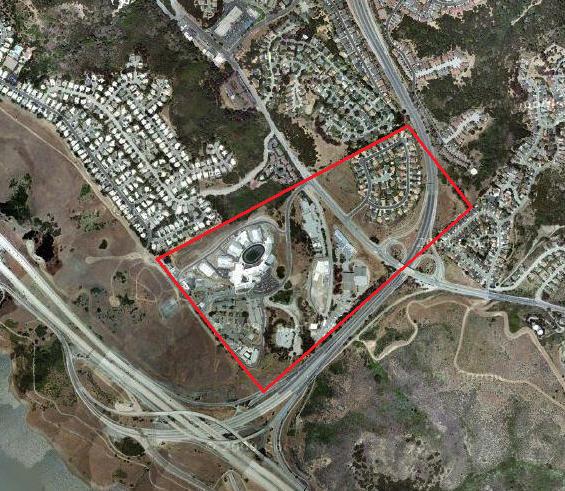
On 31 May 1876 the Sacramento Daily Union reported that "San Mateo county has purchased the farm of Hannibal Pullan for $10,000 for the purpose of a poor farm and a county hospital. The tract of land purchased contains 139 acres." (v.2 n.186)  Five months later the Marin Journal reported that the farm was in operation and added that the farm was six miles northwest of the county seat. (26 Oct 1876, v.16 n.33)   Alternately called the San Mateo County Relief Farm, the San Mateo County Poor Farm and the San Mateo County hospital, this respite for the sick, helpless and needy which opened 1 Jul 1876 was located in the hills near the current junction of I 280 and Hwy 92.  
San Mateo County Poor Farm
SMCHA Museum Archives

Inmates of the poor farm ranged from amputees, to alcoholics, to tuberculosis patients.  Some were simply old or senile and unable to live on their own.  Many were unmarried men, however at times there were widows and widowers, children and married individuals.  Some were there for a day, a few for decades. Those housed beyond the need for "hospitalization" were there at the bidding of the Board of Supervisors.  Over the years a few families paid support to the county for caring for their elderly relatives.  

I have seen some suggestion that there were "prison inmates" located at the farm, but I have found no records supporting this contention.  A few men were transferred to the county jail after being treated, but "inmate" is a term that was used for those committed to hospitals or asylums for care. Those inmates who were capable of working on the farm were expected to do so. A few were discharged because they refused.  Some of those committed to the farm did not choose to be there, a few ran away, others left as soon as they were able.  

Inmate registers, various financial reports, contracts and employee records have been located and a variety of databases to help find those connected to the poor farm in any way will be posted later this month with updates as further records are accessed.  Many of the records are incomplete and badly kept.  The same inmate might have his name spelled in three different ways on the same page and have different statistics for each of those entries. Many details were left out of the registers kept after 1916 leaving mainly names and dates. It seems likely that that register was done after the fact as much of the writing was in the same hand and looks to be written with the same pen.  Perhaps it was a copy of a volume that is no longer available, perhaps it was an attempt to consolidate information that had been kept only in the bath list and in monthly reports.
SF Call Vol 102-41 11 Jul 1907

The farm was seldom free of controversy.  Newspapers provide details of colorful characters and alleged corruption and abuse by those in charge.  Two supervisors were brought up on charges, Albert Eikerenkotter for misuse of resources and John Ford for striking an inmate. (See more in a later blog)


SF Chronicle 31 Jan 1909 p 26
 .  
As early as 1907 the Board of Supervisors put the farm up for sale.  What happened with that original sale is unknown. Locating the Board of Supervisors minutes for those early years might provide some answers, as well as details of some commitments to the farm. We do know the farm remained intact.  In 1909 the grand jury decried the deplorable conditions at the poor farm. and the grand jury in 1910 stated that while the farm was being well run the facilities were unfit. (SF Call v107-74 12 Feb 1910)


SF Call v113-85 23 Feb 1913
In 1912,  the grand jury recommended that the poor farm be sold and a fifteen acre plot be purchased near transportation. (SF Ch 31 Jan 1912 p4)  On 21 Feb (SFCh p8) it was reported that the Supervisors were considering the sale, that there had been an offer of $8000 and that there had been a bid from the Spring Valley Water Company...it does not say they are the same.  It is noted that the indigent list of the county is too small to need the larger acreage. 

In the end the only bid for the poor farm acreage was from the Spring Valley Water Company's Bourne who wanted the acreage, not for the water company, but to build a home for himself.  The county eventually rejected the bid and the farm went on as it had.

By 1918, the San Mateo County Board of Supervisors decided it was time to replace the original San Mateo County Community Hospital and Poor Farm. Dr. Kellog reported that the main building was a fire trap. Lighting was inadequate, the building was badly ventilated and the four wards were overcrowded. Toilets were flushable, but there was no water, he continued, as the wells had run dry. The nurse dispensed medicine at her own discretion, clinical records were not taken of the patients and there were no regular visits by the county physician, he added, the place smelled bad.  In 1919 construction of a new county hospital began in Beresford (San Mateo).  It opened it's doors in Sept 1923 leaving the Poor Farm to serve it's initial purpose, housing those unable to financially and physically care for themselves.

Improvements were made to the property in the 1920s.  T A water system with pump, 50000 gallon tank and pipe lines was put up for bid in 1925 by County Engineer Kneese, who estimated it would cost about $1700.  The second register for the poor farm has a entry in the front, "Electric Lights were Light for the first time on May 22,24 by Wm Tribblet, inmate."  Perhaps those lights were run by a generator for in 1926 PG&E submitted a bid to install a power line. Later that year the Bourne road was completed providing a direct route to the vicinity of the poor farm from Redwood City via Whipple Road.

There are some references to the buildings at the farm burning in 1925, but no direct evidence of the fires has been found to date.  It might explain the incomplete second register, however.  Perhaps the original register burned and the one we have was created to take it's place.

In 1929 the cost of maintaining the farming aspects of the relief home was again questioned.  The Board of Supervisors cut the budget, eliminating the 40 head of dairy cattle which were to be sold. Purchasers at an auction held in September included Manuel Cunha, JW Paulson, Manuel Sequera, JW Palson, Charles Beffa, Frank and Fred Marsh, Ralph Danz, Leo Domecus, Tony Azara, Mat Calahan, A Laurn, Joe Fassler and Ben Inderbutzen.  (E - Treasurer's Receipt Book)   On 20 Oct 1930 John Garcia renewed his lease on 100 acres of pasture at county poor farm for $700, the renewal indicating the land was probably originally leased out the year before after the cows were sold.

Still the Poor Farm continued, located registers stop in 1942.  Some sources claim Crystal Springs Rehabilitation Center was established in the 1920s, replacing the poor farm. No records have been found records supporting a particular date that the one replaced the other, the registers say Poor Farm. Today, besides Crystal Springs Rehabilitation Center, you will find the County Library Administrative Offices, the County Election Office, Hillcrest, the Sheriff's Office Crime Lab and more on the original grounds of the poor farm.


Wednesday, April 22, 2015

San Mateo County Places

Menlo Park - Stanford Village

                      Dibble  Army Hospital                    


Dibble General Hospital - district.mpcsd.org 

On 3 Jan 1943, the US War Department purchased 128 acres of land east of El Camino Real from Wells Fargo Bank & Union Trust Company.  An additional 11.94 acres were leased from Claude Lindsay.  Here, in anticipation of the need to care for wounded soldiers returning from Pacific operations, they built a hospital.  Originally named Palo Alto General Hospital it renamed Dibble Army Hospital to honor Colonel John Dibble.  He had been killed in an aircraft crash in 1943.

This land, which had been the estate of Mark Hopkins and included the mansion known as Thurlow Lodge, which was built in 1864 by William Eustace Barron, was quickly developed.  By the end of 1943 there were 115 buildings providing 2700 beds. Dibble specialized in care for the blind, neuro-psychiatry, orthopedics and plastic surgery.

The Anchora of Delta Gamma May 1946
Menlo Park in 1943 was still a small town.  The only store on Santa Cruz Avenue was on the corner of El Camino according to Dr. Bernard Silber who was transferred from Letterman Hospital in San Francisco to the new hospital.

The town grew with the new activity.

With the end of the war, the General Services Administration terminated the lease of 7.52 with Claude Lindsay on 31 Oct 1945. By 31 Jul 1946, the hospital was closed.  The remaining lease acres as well as 127 .27 acres that had been purchased were turned over to the Federal Public Housing Authority.  The FPHA returned the rest of the leased acres to Lindsay.

The .88 acres that remained were turned over to the War Assets Administration on 5 August 1946 an additional 41.607 acres were given to the WAA on 7 May 1947.  The WAA quit claimed their holdings over the next two years to the Methodist Church, Sequoia Union High School District, the Menlo Park Sanitation District and the City of Menlo Park.

Future of Stanford Village
The remaining 85.644 fee acres were utilized by FPHA for student-veterans housing purposes at Leland Stanford Jr. University (Stanford Village) beginning 15 March 1946.  The village consisted of 300 apartments for married students and 1500 dorm beds.  By 1953 the population was already waning as student housing became available on campus, but it wasn't until 1964 that Stanford Village was closed down.


The 1940s: On the Homefront 
California Military History in Palo Alto
Army Medical Department Optomology
California Military Museum - Dibble Army Hospital
Future of Stanford Village - Stanford Daily 28 Apr 1954
Last Days of the Village - Stanford Daily 28 May 1964

The site of Dibble General Hospital is currently occupied by:

* Stanford Research Institute
* City of Menlo Park
* United States Geological Survey
* West Bay Sanitary District
* First Church of Christ Scientist
* California Department of Fish and Game
* Several private owners

Wednesday, March 25, 2015

San Mateo County Places - Camp Fremont

Few of today’s San Mateo County residents know exactly where Camp Fremont once stood, but for about 18 months, from July 12, 1917 until it was dismantled in early 1919 it was a teeming World War I Training Camp. At it’s peak nearly 27,000 personnel were resident on the base. In all more than 43,000 soldiers passed through the little town of Menlo Park (former population 2300). 

Menlo Park Historical Association Collections
Camp Fremont - Easter 1918
Country living was disturbed by the sounds of guns, canon and grenades exploding as troops trained for their eminent war duty. Menlo Park was chosen as the training site due to it’s similarity to the French terrain where troops were supposedly heading. Located from the El Camino Real to the Alameda de Las Pulgas and from Valparaiso to the San Francisquito Creek, Camp Fremont covered approximately 25,000 acres (15 Square miles). 

Besides cavalry and infantry there were horses and mules which were housed further east at the 332nd Auxiliary Remount Depot on Ravenswood, near the camp hospital. Of the 16 training centers erected by the War department, Camp Fremont was the largest east of the Mississippi. Every idle carpenter on the peninsula was put to work. In all more than 700 men were put to work turning over 100 railroad cars of lumber into temporary buildings. Barracks consisted of wooden floors and sidewalls topped with canvas tents. Camp Fremont’s tent city covered more than 1000 acres. 150 Southern Pacific workers laid spur track from the main line to the middle of camp. El Camino Real was paved to accommodate the increased traffic, and Menlo Park became known as one of the worst traffic bottlenecks on the peninsula.. 

Suddenly every available store front was occupied by merchants from throughout the Bay Area. A movie theater, post office, church and library were built. Beltramo’s Winery and all taverns within 5 miles of the base were declared dry by order of the army and the county. Sequoia High School opened a branch on the base offering classes in English, arithmetic, shorthand, typing and accounting but low attendance caused the program to fold. 

Stanford University, worried about the proximity of so many men to their co-eds, stopped their objections when two companies of soldiers were assigned to the duty of making sure that no soldiers invaded Stanford’s borders and no Co-eds infiltrated Tent City. Shortly after the building started the war department halted the effort for three months. The original troops, the 41st Infantry Division National Guard from Washington, Oregon, Idaho and Wyoming were moved east to Camp Greene, but then the 8 Division, Regular Army was transferred in and remained until the dismantling. 

The troops which had trained to join the war efforts in France never did reach Europe. Some 5000, however, did serve time in Siberia. Michael Svanevik’s article "When ‘the forgotten army’ went to Siberia", The San Mateo Times, Friday, Aug 19, 1988 pg B3, tells a little of the tale of the Siberian intervention. 


 NostalgiaOnWheels
In Dec 1918, just 18 months after it was erected Camp Fremont was abandoned and the land reverted to it’s previous owners. During those short months 43,000 men had been trained. But the efforts of the 8 Army Corp of Engineers had permanently changed the once rustic town of Menlo Park.  Paved roads, water and gas services encouraged new growth. Another legacy was the more than a million pounds of lead that were removed from the hills as they were developed. 

Today a few remainders of the 1000 plus Camp buildings dot the landscape of Menlo Park. The popular McArthur Park restaurant and the Oasis Beer Garden are housed in remnants of the vast camp and the Veterans Center on Willow Road was the base hospital. 

Many of the 43000 men who served at Camp Fremont were recent emigres to the United States. In accordance with legislation passed at the time of the Civil War, the naturalization process was changed to honor their efforts for their new country. In all nearly 3200 men took advantage of the opportunity to become United States citizens before the base closed. SMCGS has indexed the Camp Fremont Naturalization Records


PastHeritage.com 
Read More

Saturday, May 11, 2013

San Mateo County Places

Belmont- Ralston Hall

                       Gardner Sanitarium                     


On 18 Aug 1900, Dr. Alden Monroe Gardner, medical superintendent for the State Asylum for the Insane at Napa, purchased the Ralston estate in Belmont for $35,000 from the Union Trust Company of San Francisco. This was to be the home of the Gardner Sanitarium, the state’s 1st private mental sanitarium. (RD 87 #181)


 As advertised in the  California State Journal of Medicine in 1904, the sanitarium specialized in nervous disorders, including substance abuse and also served those recovering from serious illness.


 The Directory of Physicians and Surgeons in the State of California for 1908 includes a multi-page advertisement with variety of pictures of the facilities.  It is interesting to note that there are only 24 physicians listed for all of San Mateo County that year.  Of those nine had been in practice in California for less than ten years. The Gardner Sanitarium is the only medical institution listed in the county.  

The Report of the Commission of Lunacy v.6 (Sacramento: 1908 California Commission of Lunacy p106) - Gardner Sanitarium- Belmont stated that the minimum rate for care at the sanitarium wass $125 a month.  There were at that time 33 patients with a maximum bed count of 60.  Nurses did not wear uniforms, so patients would not stand out.  The 79 acre estate allowed patients to roam without interacting with the public.


Although Dr. Gardner died as a patient in his own sanitarium in 1913, his son  P.S. (Sherman) Gardner continued to run it until 1922. 

In 1923 the Ralston property was sold to the Sisters of Notre Dame de Namur.  They had been looking to relocate their college from San Jose.  Today, ninety years later, Ralston Hall, mainly closed as funding is sought for seismic restoration is still a part of Notre Dame de Namur University.

Patients Playing Billiards - 1922

                              Ralston Hall                               


                                  Dr. Alden Gardner (1849 NY - 1913 CA)                         


                                           Some residents of Gardner Sanitorium                            


                                            San Mateo County Hospitals                                          


Thursday, April 11, 2013

San Mateo County Places

St Matthew - San Mateo

                      Red Cross Hospital                                              


Is Red Cross Hospital in San Mateo familiar to you?  It wasn't to me,  or the other indexers that were working in the San Mateo County Record Repository, a few weeks ago either.  Yet many San Mateo County births took place there.  Barry went home and did a little research coming back with the fact that the Red Cross Hospital was the beginning of what is now Mills-Peninsula Hospital.

At the time of the Great Earthquake, there were no hospitals in San Mateo County.  The need became evident and St. Matthew Parish in San Mateo with the support and funding of Mrs. Elizabeth Mills Reid first started a "nurses" home with six beds in 1908.  Rather than try to tell a story that is so much better told in the records of the times, the intention of this post is to help you find some of the many articles that told the tale as it unfolded.

Start with  Nursing in Mission Stations: How a Small Hospital Was Started (American Journal of Nursing 1908 Vol 8, Issues 7-17 p705) where you will read about the installation of Beatrice Woodward, a trained nurse, as parish nurse at St. Matthews.


The American Red Cross Bulletin (Vol 4 pg 89) gives an account of the beginning of the cottage and the updated modern hospital that was opened in Feb of 1909.  You'll also find pictures of the dining room, the Red Cross Guild Ward and the operating room.

In their statistical report, Benevolent Institutions 1910 the Department of Commerce: Bureau of the Census (1913 Washington DC: Government Printing Office, p262) lists only Red Cross Hospital on the Peninsula as a benevolent hospital or sanitarium.


The Directory of San Mateo, Burlingame and Hillsborough for 1912  (p5) reported that the hospital was planning to expand at a cost of $100,000.

The American Red Cross Bulletin expands on that in Vol 8-9 page 193.  That volume has the picture of the hospital above as well as a picture of the sun room that was added to speed patient recovery.

On 31 Oct 1913 the Daly City Record reported that the Troy Laundry Machinery Co. agrees to install a laundry system in St. Matthew’s Red Cross Hospital at San Mateo in 60 days for $3285.

In 1916 The Modern Hospital (vol 7 p34) reported that Red Cross Hospital, San Mateo, CA was planning the addition of a maternity ward.

By 1921 the American Medical Journal (vol 76 p1088) reported five hospitals with 25 or more beds in San Mateo County.  In addition to Red Cross Hospital (45 beds) there was San Mateo County Hospital (60) in San Mateo, Canyon Sanitarium (36) in Redwood City, California Sanitarium (with 100 beds dedicated to TB,  the largest in the county) in Belmont, and South San Francisco Hospital (35).

While some sources state that the name changed to Mills Hospital in the "mid-teens," directories and vital statistic certificates show the name as Red Cross Hospital to about mid 1921.

The Red Cross hospital is just one of many institutions supported by St. Matthew in the early twentieth century.  The parish was also responsible for Bishop Armitage Orphanage, the Maria Kip Orphanage, the Church Divinity School of the Pacific Coast, St. Matthew's School for Boys and St. Dorothy's Rest.

   Links to further information on Red Cross Hospital   


   Links to further information about Elizabeth Mills Reid  


   Links to further information about St. Matthew Parish